|
1939-1945 Propellers |
|
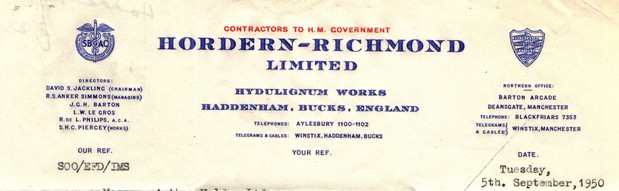
Whilst Thomas Cholmondeley Tapper and Dennis Fox had been getting the
airfield up and running they were approached by a friend, the Duke of
Richmond & Gordon, (in partnership with Edmund Hordern who had been
the Heston Aircraft Co.’s test pilot), with a proposal to build a factory
on the airfield to make aircraft propellers using a new
process known as ‘Hydulignum’. This was a high-density wood laminate,
(Lignum Vitae is so dense it doesn’t float, from the West Indies it is
also known for its medicinal properties) and was soon to be used on
various aircraft including I believe aircraft of Wellington
size.
|
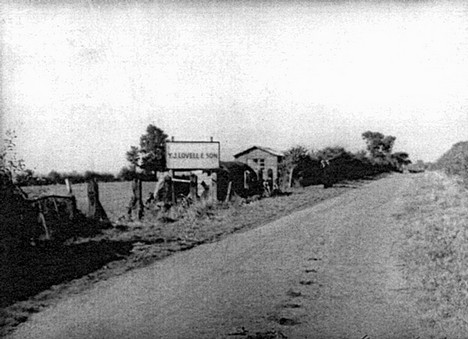
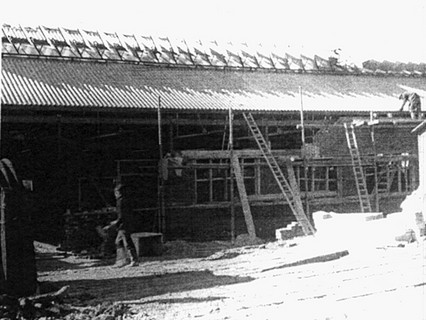
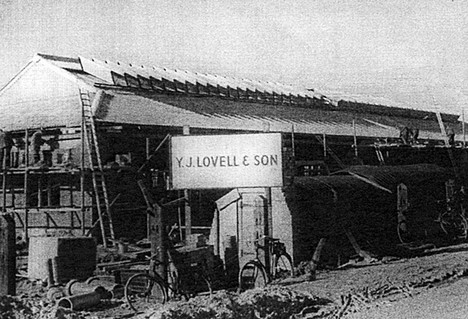
Windmill Road just before work started on the propeller factory. |
|
|
|
|
|
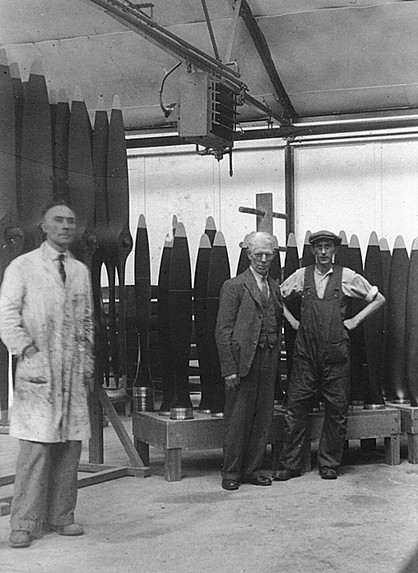
Wartime production of propellers was very large and the blades came in all shapes and sizes as can be seen in this picture of the factory floor. |
|
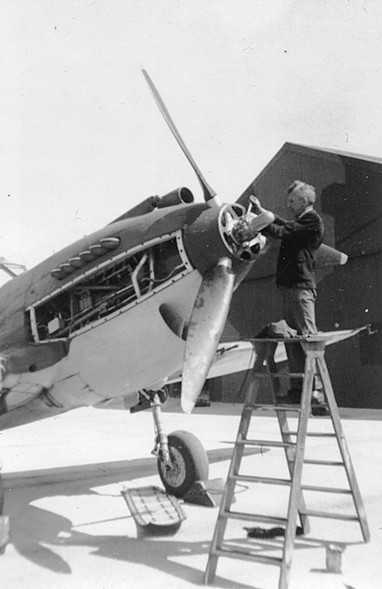
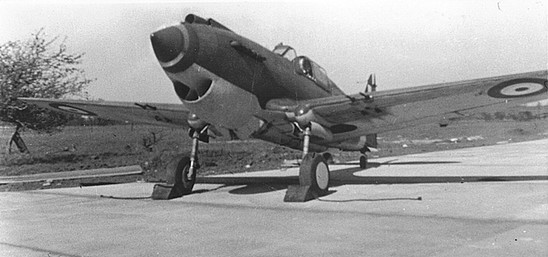
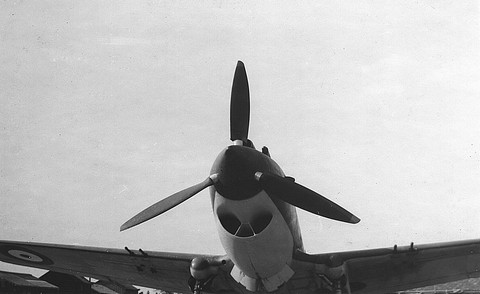
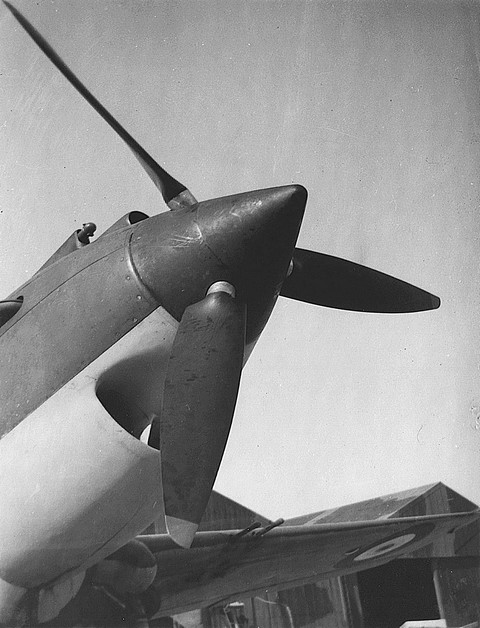
During 1942 trials were carried out on a Curtiss Tomahawk fighter,
replacing the usual metal propeller blades made by Curtiss-Wright with
Hordern-Richmond's wooden blades. The machine was borrowed from the RAF at
Boscombe Down. The results were encouraging and several samples
of the material were sent to America with the proposal that the process
was used under license in the US. |
|
|
|
|
|
|
|
|
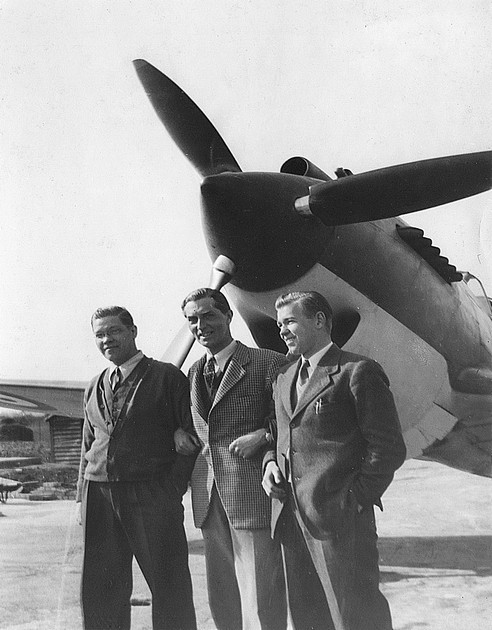
This shot shows Edmund Hordern with two Curtiss-Wright reps. |
|
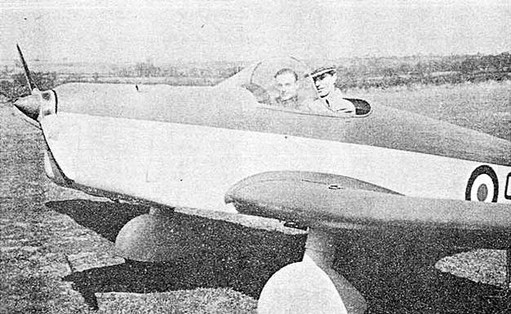
A rather poor view of Hordern's Tipsy Trainer G-AFKP in RAF trainer colours. It was initially used as a trials aircraft for propeller coverings and then occasionally for Air Training Corps joyrides before being grounded by the authorities.
Copied from www.tipsy-histories.com with the permission of Willem Ronge. |
|
|
After the war Hordern-Richmond ventured into the new world of
helicopters and produced main rotor blades for Bristol Helicopters
including the Sycamore in 1947.
|
©Copyright Peter Chamberlain, 2009, 2010, 2011